
Count Cells Less Than Specific Values in SQL: A Complete Guide with Example Data and Queries

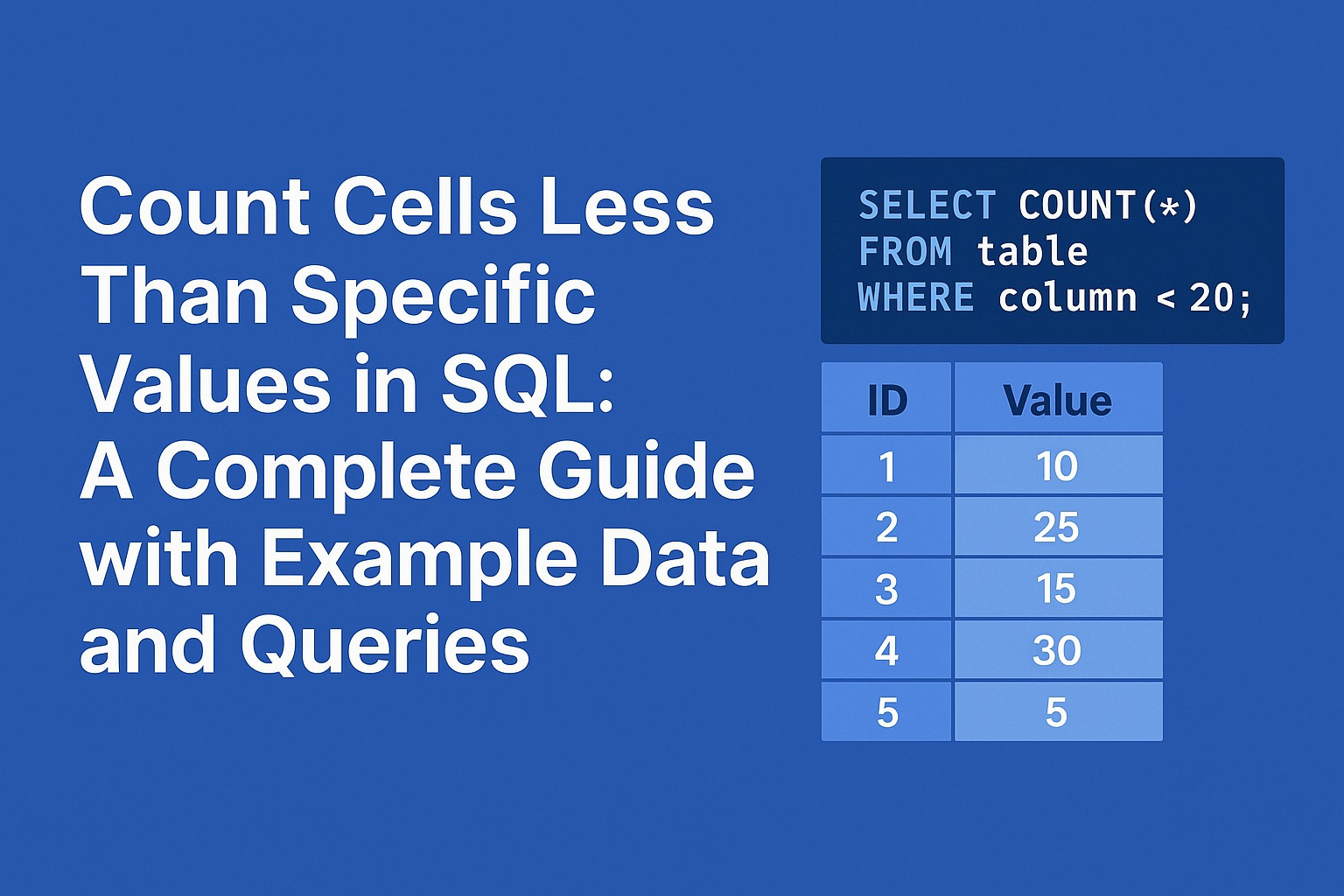
This article provides a complete guide on how to count cells with values less than a specific number using SQL, featuring an end-to-end example with data creation, dynamic counting, filtering, and visualization preparation.
Download all articles from: Mini Recipes on Advanced Data Analysis & Machine learning using Python, R, SQL, VBA and Excel
Introduction
SQL (Structured Query Language) is a powerful tool for managing and analyzing data. One of the fundamental operations in SQL is counting rows that meet specific conditions. Counting cells (rows) with values less than a given threshold is essential for various analytical tasks, such as tracking low sales, identifying underperforming entities, and detecting anomalies in datasets.
In this guide, we will demonstrate how to count values below a specific number using SQL. We will generate sample data, write SQL queries to count relevant rows, apply dynamic thresholds, and explore advanced filtering techniques.
Understanding the Problem
Counting cells that contain values below a specific number is useful in many scenarios, such as:
Business Analytics: Identifying low-performing sales regions.
Finance: Tracking transactions below a certain amount.
Quality Control: Identifying defective products below an acceptable standard.
Customer Support: Finding support tickets that received low ratings.
SQL provides powerful functions to count such occurrences efficiently using queries.
